
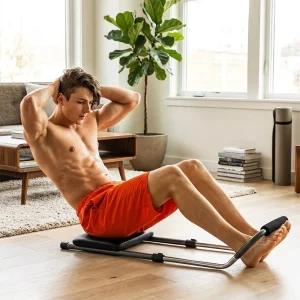


The Best Sit-Up Benches in 2026
A good sit-up bench stays planted, holds your legs comfortably, and gives you an angle you can actually control. Here are two strong options—and the features that matter more than a long list of extras.
Updated September 2026 · Approx. 6-minute read
Quick answer: The REP AB-3000 2.0 is our versatile home gym pick. The Rogue AB-3 suits buyers who want a heavier premium bench, provided they add the compatible foot catch for sit-ups. These are editorial picks based on published specifications, not hands-on tests. Check current availability and accessory configuration before ordering.
Our picks at a glance
| Pick | Best for | Why it stands out | Consider before buying |
|---|---|---|---|
| REP AB-3000 2.0 | One bench for core and strength work | Built-in adjustable leg rollers, decline to −12°, and flat/incline settings | At 89.3 lb, it is substantial to move around |
| Rogue AB-3 | Premium multi-use gym setup | Heavy steel frame and many seat/back adjustments | Foot catch is optional; confirm it is included in your order |
1. REP AB-3000 2.0 — best all-around choice
The AB-3000 2.0 makes sense when floor space is limited and your bench needs to do more than abdominal work. Its back pad includes a −12° decline setting, while the built-in leg rollers have six positions. That combination lets you set up for controlled decline sit-ups and then switch to flat or incline lifting.
REP lists an 89.3 lb bench weight and a 1,000 lb stated weight capacity. Those numbers point to a substantial piece of equipment, though the capacity is a manufacturer specification rather than a reason to ignore proper setup. The tradeoff is the weight: it is less convenient if you need to carry your bench into storage after every session.
Best for: A home gym owner who wants one adjustable bench for sit-ups, presses, and general strength training. View official specifications .
2. Rogue AB-3 — best premium multi-use option
The Rogue AB-3 offers six seat settings and nine back pad settings, with a heavy 11-gauge steel construction. Rogue lists the bench at 117 lb. Its optional foot catch supports decline sit-ups, which makes the accessory an essential part of the purchase if abdominal work is your main reason for buying.
This is a larger, heavier bench suited to a dedicated training space. If you only need a compact platform for a few weekly crunches, its size and complexity may be more than you need.
Best for: A dedicated gym where multiple users want a premium adjustable bench for both lifting and core work. View official specifications and foot catch options .
How to choose the right sit-up bench
Start with stability
Look for a wide, planted base and a frame that does not shift when you get on or off. Compare the stated capacity against your body weight plus any external load, and follow the maker’s intended-use guidance.
Check the leg support
Secure, padded rollers make a bigger difference than a steep angle. Make sure the roller position fits your height and that the bench actually includes the foot support needed for decline sit-ups.
Choose a usable angle
A mild decline is enough for many people. A steeper setting increases the challenge, but control and a comfortable range of motion should come first.
Measure your space
Check the assembled footprint, the room needed behind the bench, and whether you can move or store it easily. A bench you can set up quickly is more likely to get used.
Dedicated sit-up bench or adjustable weight bench?
If abdominal work is your only goal, a dedicated decline bench with secure ankle rollers can be a simple solution. If you also train chest, shoulders, and arms, a flat-incline-decline bench usually gives you more use from the same floor space. In either case, verify that the bench supports the exact movement you plan to do; “adjustable” does not automatically mean it has a decline position or a foot hold.
A simple way to use your bench
- Set the bench to its least demanding decline angle and lock every adjustment.
- Place your legs securely under the rollers without forcing your ankles into an awkward position.
- Raise your torso with a controlled movement; lower slowly instead of dropping backward.
- Start with a manageable number of reps. Add difficulty only when you can maintain control.
If a movement causes pain, stop and seek guidance from a qualified professional.
Frequently asked questions
Is a steeper sit-up bench better?
Not automatically. A steep decline can make the movement harder, but the best setting is one that lets you keep the motion controlled and comfortable.
Can I use any adjustable bench for decline sit-ups?
No. Confirm it has a decline position and a compatible way to secure your legs. The Rogue AB-3, for example, calls for its optional foot catch for sit-up use.
What is the best choice for a small home gym?
A multi-use flat-incline-decline bench is often the more practical purchase if you also lift weights. Measure the full footprint and storage space before deciding.
The takeaway
Choose the REP AB-3000 2.0 for a versatile bench with built-in leg rollers. Consider the Rogue AB-3 when you have a dedicated space and want a heavier premium option—remember to select the foot catch. For any other bench, prioritize a stable frame, comfortable leg support, and an angle you can control.
Editorial note: Product details were checked against manufacturer pages in September 2026. No hands-on testing or price ranking is claimed; specifications, availability, and accessories can change.
 English
  Arabic
  French
  Spanish
  Portuguese
  German
  Japanese
  Korean